What Is the Best Glamping Tent to Buy in 2026?
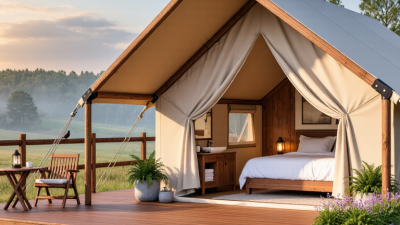
A great Glamping Tent should do more than look striking in a listing photo. It must suit the site, the season, and the people who will sleep inside it. A canvas bell tent may feel welcoming beneath a pine canopy, while a sturdy safari-style model can offer more room for beds and luggage. But neither is automatically the best choice. Details matter.
Ruben Martinez, founder of the American Glamping Association, represents a hospitality-focused perspective that is useful when comparing tents: match the structure to the guest experience, site conditions, and operating plan. Treat that as a buying principle, not a substitute for checking product specifications. Look closely at fabric weight, waterproofing, ventilation, floor design, frame strength, and replacement-part availability. A zipper that sticks during a rainy weekend is not a small detail. Neither is a roof that traps heat at noon.
This guide compares the features that shape comfort, durability, setup, and long-term value in 2026. It also asks a less glamorous question: what will maintenance really take? No tent is perfect. The right choice depends on your climate, budget, available space, and tolerance for upkeep. Choose with care. The prettiest option may not be the one guests remember most fondly.
Define the 2026 Use Case: Climate, Season, Guest Capacity, and Site
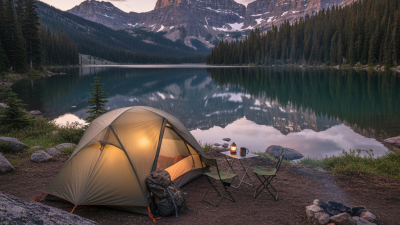
A glamping tent should match the conditions it will face, not just look inviting in a photograph. Start with the site’s usual weather: wind exposure, heavy rain, humidity, and overnight temperatures. A sheltered woodland plot has different needs from an open ridge. Check the tent’s documented wind and water-resistance ratings, and remember that careful pitching matters too. Ratings cannot fix poor anchoring.
Season changes the decision. For warm-weather stays, mesh panels and cross-ventilation can reduce heat and condensation. For colder trips, look for compatible stove provisions, safe clearances, and a design intended for the expected temperatures. Ventilation still matters. A sealed tent can collect moisture from breathing and damp clothing, even on a chilly night.
Guest capacity should include more than sleeping bodies. Leave room for bags, wet boots, and a clear path to the door; a tent rated for four may feel cramped with four adults and full luggage. Check the actual floor dimensions and peak height. Then consider the site: measure the level ground, note nearby trees and drainage, and confirm there is space for guy lines. Small details matter. I would leave a little margin in both capacity and footprint; plans, inconveniently, are not always perfect.
What Is the Best Glamping Tent to Buy in 2026?
Define the use case first: climate, season, guest capacity, and site.
How to use this chart: These are practical planning estimates in square feet, not regulated tent-capacity standards. Choose the roomier layout if guests need space for luggage, furniture, or indoor time during poor weather. For colder or wetter seasons, check the tent’s weather rating, ventilation, and insulation options; use a stove only in a tent specifically designed for it. Before buying, confirm the full footprint fits your site, including guy lines and safe clearance.
Compare Bell, Safari, Cabin, and Geodesic Tents by Layout and Usable Space
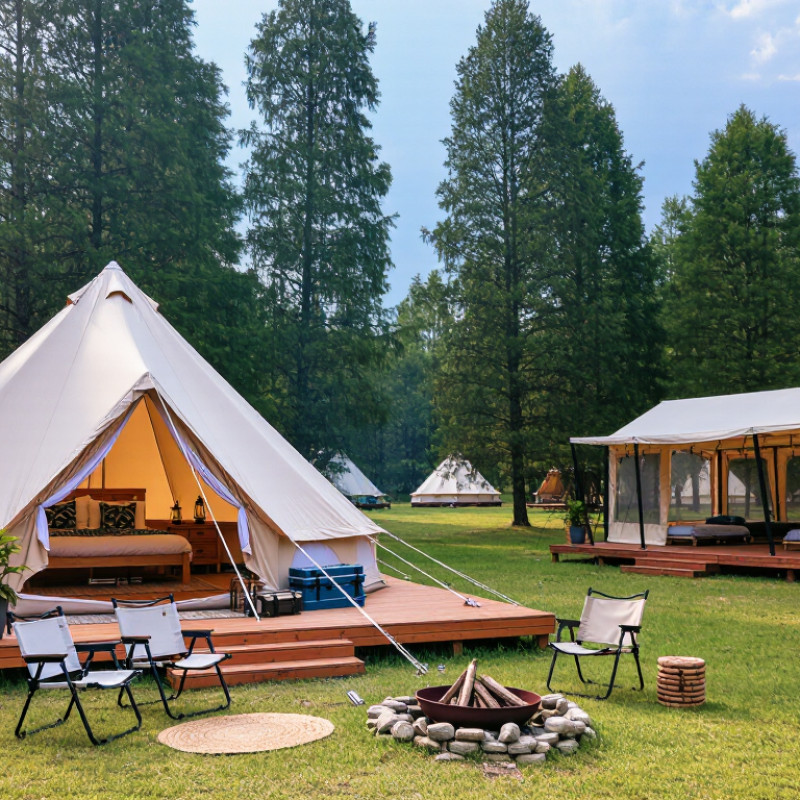
What makes a glamping tent feel spacious is not its floor-area number alone. Wall shape, door placement, and furniture all affect usable space. A bell tent’s circular plan suits a central table and open sleeping area, but sloping walls limit edge space. Lovely, until bags pile up. It works best when the layout stays simple.
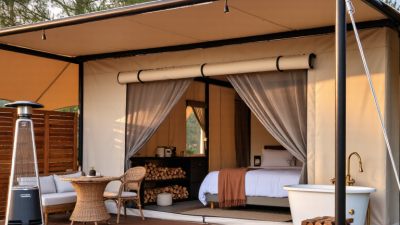
Safari tents usually offer a long rectangular footprint, often with separate sleeping and living zones. That can work well for families or longer stays, though partitions and bulky furniture may narrow walkways. Cabin tents have straighter walls, so beds, shelves, and chairs fit more predictably. Check the floor plan against real furniture dimensions; a drawn bed can look smaller than yours. A little inconvenient, but useful.
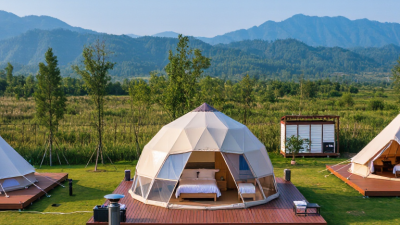
Geodesic tents can feel open in the center, while angled panels may make it harder to place tall cabinets or beds near the perimeter. Sketch your sleeping setup, door swing, and a clear walking path before choosing. Then leave room for luggage and wet coats. The best choice in 2026 is the shape that preserves comfortable movement after setup, not simply the one with the largest advertised area. I would still test the layout at full scale if possible; plans rarely show every awkward corner.
Assess Rain Protection with ISO 811 Tests and 1,500 mm+ Hydrostatic Head
For a 2026 glamping tent, treat rain protection as a testable specification, not a reassuring label. ISO 811:2018 measures fabric resistance to water pressure and reports the result as hydrostatic head. A rating of 1,500 mm represents a water column 1.5 metres high, or roughly 14.7 kPa. Ask whether the figure comes from an ISO 811 test, and whether it applies to the tent fabric rather than a separate sample.
Small details matter.
That number is only part of the picture. ISO 811 tests fabric, not a fully pitched tent in wind-driven rain. Seams, zippers, floor edges, and worn coatings can still let water in. Look for construction details and clear test documentation.
NOAA Atlas 14 precipitation-frequency reports provide location-specific rainfall estimates, useful when comparing a tent with the conditions at your campsite. Match the shelter to local exposure, not just a headline rating.
A test result helps, but it is not a promise. Check the seams yourself.
Check Safety and Durability Against EN 5912 and NFPA 701 Requirements
When comparing a glamping tent in 2026, ask for test evidence against BS EN 5912 and NFPA 701—not just “weatherproof” or “flame-retardant” claims. BSI’s BS EN 5912 sets safety requirements and test methods for camping tents. Check the report for the exact tent model, tested materials, standard edition, and recorded results. A report for a fabric swatch may not represent the finished tent, seams, windows, or floor.
NFPA 701 evaluates flame propagation in textiles and films; it does not certify a whole tent as fireproof. The test report should identify the method used and show measured results against its pass criteria. Ask whether the fly, inner wall, and any clear panels were tested separately. Small details matter. A compliant fabric can still be poorly tensioned or damaged by a sharp pole end. On site, check stitching, guy-line points, and ventilation, then follow the maker’s clearance guidance around heat sources. I would still inspect the tent in person where possible; paperwork cannot show every weak seam.
Compare Total Cost, Setup, Warranty, and Replacement-Part Availability
In 2026, the best glamping tent is not automatically the one with the lowest price. Compare the delivered cost, required groundsheet, stakes, shipping, and any site-preparation needs. A cheaper tent can become costly when key parts are sold separately. Check setup instructions before buying; a large frame that needs several people may be awkward on a narrow, uneven pitch. A neat price comparison helps, but it cannot predict every muddy weekend.
KOA’s 2024 North American Camping Report counted 58 million North American households camping in 2023, a reminder that tents serve very different trip styles. Setup matters. Ask whether the stated setup time assumes experienced helpers and dry weather. Read warranty terms for fabric, seams, poles, and damage exclusions, then confirm how claims are handled. Replacement parts matter, too. Check whether poles, connectors, and rainfly panels can be ordered individually, and whether stock is expected to continue after the season. That detail is easy to overlook. A long warranty is less reassuring if a broken connector means replacing the whole tent. Compare written policies, not sales promises.