Leave Your Message

How to Choose the Best Personalized Canopy Tent?

Choosing the best Personalized Canopy Tent starts with a clear picture of how and where it will be used. A tent for weekend markets may need different features from one used at school events or outdoor promotions. Think about the number of people beneath it, the space available, and how often it will be packed and moved. Small details matter. A low doorway, awkward carry bag, or unclear setup instructions can become frustrating after a long day.

Compare the frame, canopy fabric, print options, and stated weather guidance before focusing on color or price. Check product dimensions and ask how the printed design may look across seams and roof panels. A logo that appears sharp on a screen can lose impact when it is stretched over fabric. Not always obvious. Reliable specifications and clear care instructions are more useful than broad claims about durability. If possible, review close-up product photos or request a sample before ordering several tents.

There is no single model that suits every buyer. A heavier frame may feel reassuring but take more effort to transport; a lighter option may be easier to handle but require closer attention to its stated use limits. That trade-off is easy to overlook. The best choice balances appearance, practical setup, transport, and budget. Before you decide, compare your real needs with the manufacturer’s specifications, and leave room to reconsider anything that seems vague.
How to Choose the Best Personalized Canopy Tent?

Understanding Personalized Canopy Tent Types and Uses

Personalized canopy tents differ by frame, roof, and setup method. A pop-up model suits market stalls and weekend events because its scissor frame opens quickly. A pole-supported canopy can feel lighter, but needs suitable ground and careful anchoring. For repeated trade-show use, a stronger frame and replaceable printed panels may be more practical. Check packed weight, assembled dimensions, and whether one person can manage setup.

Use matters as much as appearance. A food stall needs clear front access and shade over the work area; a sports team may need open sides for easy movement. Full-color roof printing is visible from a distance, while sidewalls help display schedules or protect stored equipment. The trade-off is real: more printed coverage can add cost and make wind handling harder. No graphic can compensate for an unstable setup.

Market context helps explain the range of options. The Outdoor Industry Association’s 2024 Outdoor Participation Trends Report counted 175.8 million U.S. outdoor participants in 2023, indicating a broad audience for recreational shelters. Grand View Research estimated the global camping tent market at about $3.13 billion in 2023; that category is broader than personalized canopies, so it is useful context, not a direct sales forecast. Before ordering, confirm fabric specifications, frame materials, print placement, and stated wind or weather limits. A small compromise remains: the most striking design may not be the easiest to transport.

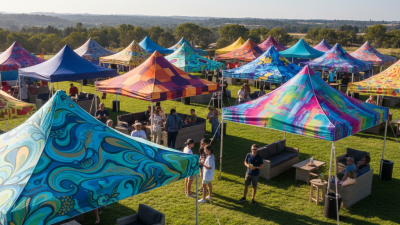
Assessing Size, Materials, and Weather Protection

How to Choose the Best Personalized Canopy Tent?

Assessing Size, Materials, and Weather Protection

Start with the space you need to cover. A 10-by-10-foot canopy can shade a small serving table, but it may feel cramped with chairs and foot traffic. Measure the setup area, then allow room for people to move around the legs. Check the canopy’s actual interior clearance, too; sloping roof edges can reduce usable space. One easy mistake is choosing by headline dimensions alone.

Fabric and frame choices shape durability. Coated polyester is common because it is relatively light and can resist water, but seams and stitching matter as much as the fabric. ASTM International’s D751 standard includes test methods for coated fabrics, so ask whether material testing is available and what it covers. NOAA recorded 28 separate U.S. billion-dollar weather disasters in 2023, underscoring why weather planning matters. That national figure cannot predict your event’s conditions, though. Check local forecasts, secure every leg with suitable weights or stakes, and avoid using a canopy in unsafe winds.

Tips: Look for clear specifications on frame material, fabric coating, seam construction, and wind guidance. Test the layout before event day. Shade can shift, and a tent that looked roomy on paper may not feel that way in use.

Comparing Customization Options and Printing Methods

How to Choose the Best Personalized Canopy Tent?

Customization is more than adding a logo. Consider the frame size, roof color, valance shape, and how much printed space you need. A small logo on the front valance can be easy to spot, while a full-roof design creates a stronger visual presence. It may also show wrinkles and alignment errors more clearly. Check the artwork proof at full size before approving production.

Tips: Ask what fabric and printing process will be used. Dye sublimation suits detailed, colorful designs on compatible polyester; screen printing can work well for simpler artwork. Request a sample or close-up photo, and check how colors look beside seams.

Think about how the tent will be used. Frequent setup and folding can stress printed areas, especially near corners and seams. Ask the supplier about care instructions, color consistency, and replacement panels. These details are less exciting than choosing a bright graphic, but they matter after repeated use. It is tempting to cover every panel with text. That can make key information harder to read from across a busy event space. Keep the message simple, and leave some open space. My own preference might not suit every event; test the layout at a distance before committing.

Evaluating Frame Quality, Portability, and Setup

How to Choose the Best Personalized Canopy Tent?
Evaluating Frame Quality, Portability, and Setup

A personalized canopy earns its place when the frame feels steady before the printed roof catches your eye. Check whether the legs lock firmly, joints show little play, and replacement parts are available. Aluminum frames are lighter to carry; steel often feels sturdier but adds weight. Neither material guarantees quality. Look for reinforced corners and clear guidance on anchoring, especially if the tent will sit on pavement. A low weight sounds appealing. It does not prove durability.

Portability is more than the frame’s listed weight. Measure the packed tent and consider whether one person can lift it into a vehicle without twisting awkwardly. The Outdoor Industry Association’s 2024 Outdoor Participation Trends Report counted 175.8 million U.S. outdoor participants in 2023, a reminder that outdoor use spans varied settings and users. For setup, ask for a clear assembly guide and practice once before event day. Time the process with two people, including roof attachment and anchoring. That matters. A Grand View Research estimate valued the global camping tent market at about $3.21 billion in 2023, but broad market growth cannot tell you how one canopy performs. Test the details yourself; real setup conditions are rarely as neat as product photos.

Selecting a Tent Based on Budget and Intended Use

Set your budget after deciding where the canopy will work hardest. For a few backyard lunches, a compact frame and basic weather protection may be enough. Repeated market days or outdoor events call for sturdier joints, replaceable parts, and printed graphics that resist fading. The Outdoor Industry Association’s 2024 Outdoor Participation Trends Report counted 175.8 million U.S. outdoor participants in 2023. That broad audience makes portable shade useful, but it does not mean every buyer needs a premium model. Measure the packed size, setup area, and vehicle space before paying for extra width. Small details matter.

For frequent event use, compare the full cost, not only the purchase price. The American Rental Association projected U.S. equipment and event rental revenue of $78.2 billion in 2024; this covers many rental categories, not canopy tents alone. Still, it signals a mature rental market worth checking before buying for one weekend. Ask about setup labor, delivery, and damage fees. For regular use, a stronger frame may cost more upfront but save time when wind picks up. A custom canopy also needs legible artwork from several steps away. Keep it simple. I would avoid paying for elaborate graphics before confirming the tent’s footprint and the event surface. A bigger canopy can feel reassuring on paper, then become awkward beside a narrow stall or crowded walkway.

How to Choose the Best Personalized Canopy Tent? – Selecting a Tent Based on Budget and Intended Use

Option Typical Budget (USD) Common Size Typical Construction Personalization Best Suited For Things to Consider
Entry-level pop-up $150–$350 10 × 10 ft Lightweight steel frame; basic polyester canopy Usually a logo or text on one valance or canopy panel Occasional community events, school fairs, and short-term promotion Check print coverage, replacement-part availability, and whether stakes or weights are included.
Mid-range pop-up $350–$800 10 × 10 ft Reinforced steel or entry-grade aluminum frame; heavier polyester canopy Printed valances and selected panels; some options allow a full-color canopy Regular market stalls, local events, and small business displays Compare frame weight, fabric specifications, setup method, and the cost of a carry bag.
Heavy-duty pop-up $800–$1,500 10 × 10 ft More robust aluminum frame; often paired with heavier canopy fabric More extensive panel printing, including multiple sides or a full canopy Frequent outdoor events, trade shows, and repeated setup and takedown A stronger frame can add weight; confirm packed dimensions and available replacement parts.
Large pop-up $700–$1,600 10 × 15 ft Steel or aluminum frame; larger canopy and footprint than a standard 10 × 10 ft model Printed roof and/or side panels, depending on the configuration Food service, registration areas, and displays needing extra covered space Check venue space limits, transport requirements, and the number of people needed for setup.
Extra-large pop-up $900–$2,200 10 × 20 ft Large modular frame; heavier-duty configurations are generally more substantial to transport Multiple printed panels or broad-area canopy graphics Large booths, event operations, and multi-table displays Allow enough setup space and verify the frame configuration, packed size, and anchoring requirements.
Seasonal or semi-permanent shelter $1,000–$3,000+ Varies; commonly larger than 10 × 10 ft Designed for longer installation; materials and frame systems vary widely Custom graphics may be available for roof and side panels Longer-duration installations where the structure is not packed away after each event Confirm local rules, installation needs, maintenance, drainage, and weather limits before purchase.

Note: Budgets are approximate USD planning ranges for unbranded products; actual prices depend on size, frame, fabric, print coverage, accessories, shipping, and order quantity. Check the seller’s specifications for fabric treatment, warranty, and safe operating conditions. Pop-up tents are not safe to use in severe weather, and all canopies should be properly secured and taken down when conditions become unsafe.