Leave Your Message

How to Choose the Best Hiking Day Pack for Your Needs

Choosing the right Hiking Day Pack can change an ordinary trail into a more comfortable, safer experience. The best option is not always the largest or most expensive model. It should match your route, weather, body shape, and equipment.

Outdoor educator and long-distance hiker Andrew Skurka often emphasizes this practical principle: “Choose the pack for the load and the trip, not for its appearance.” That advice matters on real trails. A compact 15-liter pack may suit a short, dry woodland walk. A 25-liter model may work better when carrying rainwear, lunch, water, a first-aid kit, and extra layers. Too little space creates frustration. Too much space encourages unnecessary weight.

Fit comes first.

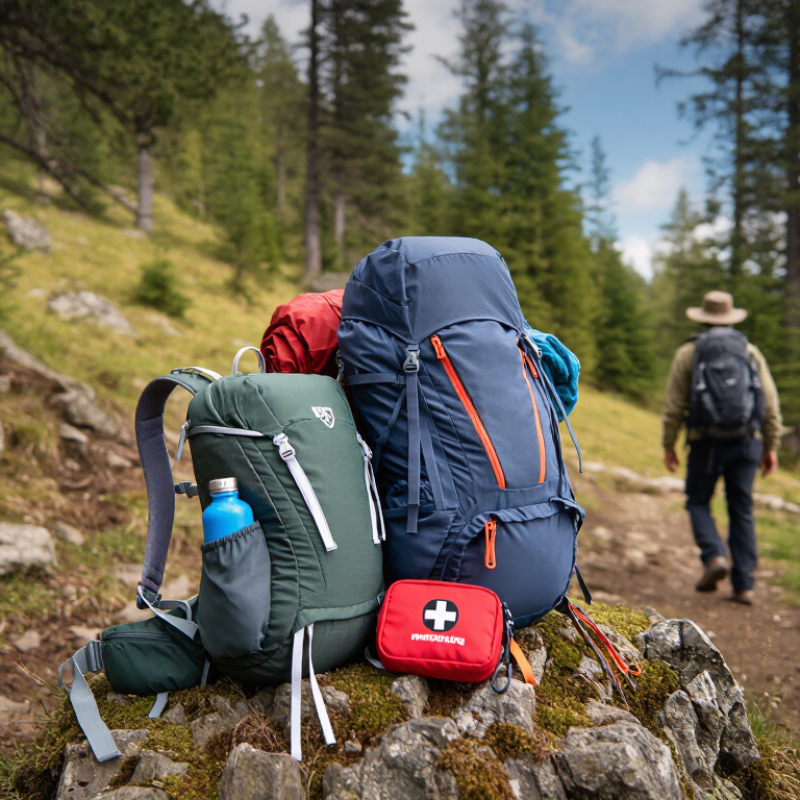
A useful Hiking Day Pack should sit securely against your back without restricting your shoulders. The hip belt should rest comfortably, while the shoulder straps remain firm but relaxed. Breathable back panels can reduce discomfort during steep climbs, although they may add weight and cost. Side pockets should hold water bottles within easy reach. Zippers should open smoothly, even with cold or wet hands.

Small details matter outdoors. A muddy trail can expose weak fabric quickly. A sudden shower can test every seam. Still, no pack solves poor planning. I have learned that carrying less often improves the day, but carrying too little can create avoidable problems. This guide examines capacity, fit, ventilation, durability, organization, and weather protection, helping you choose with evidence rather than marketing claims.
How to Choose the Best Hiking Day Pack for Your Needs

Define the Trip: Match a 10–30 L Pack to Distance, Weather, and Gear

How to Choose the Best Hiking Day Pack for Your Needs

Define the Trip: Match a 10–30 L Pack to Distance, Weather, and Gear

Choosing the best hiking day pack starts with the trip, not the color or pocket count. For walks under three hours, a 10-liter pack often carries water, a light layer, snacks, and a small first-aid kit. I have found that compact packs feel stable on steep trails, but they punish overpacking. If the route includes exposed ridges, reserve space for a shell and an emergency blanket. Weather can change quickly.

A 15–20-liter pack suits longer day hikes, especially when temperatures shift between a cool trailhead and a warm valley. It can hold two liters of water, lunch, navigation tools, spare socks, and insulation. On remote routes, 25–30 liters offers room for extra food, a headlamp, stronger rain protection, and a fuller safety kit. Yet capacity is not a safety plan. A large pack may tempt you to carry unnecessary gear and strain your shoulders. Fit matters. Check that the hip belt rests comfortably and the load stays close to your back. I sometimes choose a smaller pack than planned, then regret losing room for wet clothing.

Tips: Lay every item on the floor before packing. Weigh the loaded pack. Keep dense items near your spine, and test the fit on stairs. Select breathable back panels for humid weather. For rain, use a liner rather than trusting a cover alone. Recheck the forecast before leaving. Small decisions matter.

Measure Fit: Keep Pack Weight Near 10–20% of Body Weight

How to Choose the Best Hiking Day Pack for Your Needs

A well-fitted day pack should carry about 10–20% of your body weight. For a 150-pound hiker, that means roughly 15–30 pounds. Stay near the lower end for hot weather, steep trails, or long distances. The American College of Sports Medicine notes that heavier loads increase energy demands and can accelerate fatigue.

U.S. military load-carriage research also links increasing pack weight with greater pressure on the back, hips, and knees. These findings are not a perfect hiking formula, but they offer a useful safety boundary.

Fit matters as much as weight. Adjust the hip belt over your pelvic bones, then tighten the shoulder straps until the pack sits close to your back. Keep dense items, such as water, near your spine. A loose pack may swing like a bucket on a rough descent.

I usually walk for 20 minutes with the intended load before committing to a trail. My shoulders once felt fine at the trailhead, but my lower back disagreed after two hours. That mistake changed my packing habits.

Carry water, a light layer, food, navigation tools, and basic first aid. Remove “just in case” items that never leave the pack.

The Outdoor Industry Association’s 2024 participation report shows millions of Americans taking part in outdoor recreation, yet experience levels vary widely. Your ideal load should reflect your conditioning, route, and weather—not a number copied from someone else.

Assess Comfort: Compare Hip-Belt Transfer, Ventilation, and Sternum Fit

A good hiking day pack should transfer weight to your hips, not punish your shoulders.

The Outdoor Industry Association’s 2024 Outdoor Participation Trends Report recorded more than 50 million U.S. hiking participants. That scale makes fit a practical safety issue, not a luxury. Start with a loaded test pack. Place heavier items near your spine. Tighten the hip belt across your upper pelvis. You should feel firm pressure, not numbness. A loose belt forces your shoulders to carry the load.

Ventilation also deserves a realistic test. Mesh panels and a shaped back channel can improve airflow, but sweat will not disappear. The American College of Sports Medicine warns that heat stress increases with exertion and poor cooling conditions. Walk for ten minutes in the pack before buying it. Check whether the frame rubs your lower back. Move your arms naturally. My own fitting mistake was trusting an empty pack; the same bag felt unstable after adding water and a jacket.

Tips: Adjust the sternum strap across your mid-chest, not your throat. It should stop shoulder straps from sliding outward. Keep two fingers beneath the strap. If breathing feels restricted, lower it slightly. Hip belts should carry most of the load, yet this is not absolute. Smaller hikers may need more shoulder support. Compare two sizes, and reassess after a real climb. The best fit can still change when clothing, terrain, and fatigue enter the picture.

Audit Durability: Weigh 200–420D Nylon, Seams, Zippers, and Water Resistance

A reliable hiking day pack starts with its fabric, but denier alone does not decide durability. A 200D nylon pack can feel light and flexible, while 420D nylon usually handles scraping against rock better. However, weave, coating, and yarn quality also matter. A 420D fabric is not automatically twice as abrasion-resistant.

I learned this after buying a lightweight pack with strong-looking fabric. Its bottom survived wet trails, but the shoulder-seam stitching loosened after several months. Check reinforced stress points near the shoulder straps, hip belt, grab handle, and lower corners. Tight, even stitches are reassuring. Bar-tacks should look dense, not decorative. ASTM D1683 seam-strength testing provides a useful comparison, although household use rarely matches laboratory loading.

Zippers deserve a close inspection. Choose teeth that track smoothly and pulls large enough for cold fingers. Covered zippers improve weather resistance, but they can trap grit. Textile Exchange’s 2024 Materials Market Report places nylon at roughly 5% of global fiber production, showing its broad industrial use, not guaranteed field performance. The Outdoor Industry Association’s 2024 report recorded 175.8 million U.S. outdoor participants in 2023, so real-world durability matters across many conditions. Look for a stated hydrostatic-pressure result under ISO 811, rather than vague “water-resistant” wording. A rain cover still helps. I sometimes overvalue fabric weight and overlook zipper maintenance. That mistake is worth avoiding.

How to Choose the Best Hiking Day Pack: Durability Audit

Compare practical durability checkpoints when evaluating 200D–420D nylon day packs. Denier indicates yarn linear mass, stitch density is counted per inch, and hydrostatic-head values are commonly used to describe fabric water resistance.

Higher values generally indicate more material or testing intensity, but pack durability also depends on weave, coatings, seam construction, zipper design, and abrasion exposure. A 200D fabric has a nominal yarn mass of 22.2 g per 1,000 m, while 420D has 46.7 g per 1,000 m because 1 denier equals 1 g per 9,000 m.

Check Features: Confirm 2–3 L Hydration, Safety, and Pole-Carry Options

Choosing the best hiking day pack starts with matching its features to your route, weather, and habits. For most short hikes, a 2–3 liter hydration system helps maintain steady drinking without frequent stops. Check whether the bladder fits securely and whether the hose stays accessible while walking. A wide opening makes cleaning easier, which matters after warm, dusty trips. I once chose a pack with poor hose routing, and drinking became frustrating. That small detail changed my pace.

Safety features deserve equal attention. Look for reflective panels, a whistle, secure zippers, and enough space for a basic first-aid kit. A chest strap can improve stability on uneven ground, while padded shoulder straps reduce pressure during longer climbs. Pole-carry options are useful when terrain changes quickly. Test the loops with your actual trekking poles. Some designs hold poles well in theory but allow them to swing against your legs. That is not a serious failure, but it can become irritating.

Tips: Fill the hydration system before buying, if possible, and check how the weight sits on your back. Pack a light jacket, map, phone, and emergency layer to test capacity. Try the pack while wearing your hiking clothes. Fit can feel different after an hour. Ask whether you can reach the water valve, pockets, and pole loops without removing the pack. If one feature seems awkward in a shop, it may feel worse on a steep trail.

How to Choose the Best Hiking Day Pack for Your Needs – Check Features: Confirm 2–3 L Hydration, Safety, and Pole-Carry Options
Pack Type Recommended Capacity Typical Empty Weight 2–3 L Hydration Compatibility Safety Features to Confirm Trekking-Pole Carry Best Use Selection Notes
Minimalist Summer Day Pack 10–15 L 250–500 g Whistle, reflective detail, secure sternum strap, and emergency-contact label Usually external elastic loops; verify that the lower attachment point is secure Short hikes, warm-weather trails, and supported day walks Choose only when clothing, food, and emergency equipment are compact. Limited room for extra layers.
Standard All-Season Day Pack 18–25 L 500–900 g Whistle, reflective accents, load-stabilizing sternum strap, and protected valuables pocket Most single-day hikes in changeable conditions Often the most versatile size because it holds rainwear, food, first-aid supplies, and extra insulation.
Fast-and-Light Trail Pack 12–20 L 300–650 g Whistle, high-visibility details, stable harness, and accessible emergency storage Fast hiking, trail running, and lightweight day missions Prioritize a close-to-body fit, low bounce, breathable back panel, and easy access while moving.
Technical Mountain Day Pack 22–30 L 750–1,200 g Whistle, reflective markings, ice-axe or tool attachment, durable fabric, and reliable compression straps Steep, exposed, rocky, or rapidly changing mountain conditions Look for a supportive frame, adjustable torso length, firm hip belt, and compression that prevents shifting.
Winter or High-Volume Day Pack 28–35 L 900–1,500 g Whistle, reflective details, robust buckles, reinforced attachment points, and snow-shedding fabric Cold-weather hikes, long winter days, and bulky safety equipment Capacity matters more than minimum weight. Confirm that gloves, spare layers, traction equipment, and food fit comfortably.
Comfort-Focused Day Pack 20–28 L 800–1,300 g Whistle, reflective accents, padded hip belt, sternum adjustment, and accessible first-aid storage Commonly included; verify that poles do not obstruct side pockets Long day hikes, heavier loads, and hikers who value carrying comfort Check torso adjustment, hip-belt fit, ventilation, and whether the pack remains stable when fully loaded.
Small Urban-to-Trail Pack 15–22 L 500–900 g Reflective details, secure zippers, whistle, and a separate valuables compartment Commuting, park trails, and easy hikes near services Choose this style only if pole carry and technical trail features are not essential.

Practical check before buying: Measure the reservoir sleeve, test the shoulder and hip-belt adjustment with your intended clothing, and confirm that the pole-carry system holds poles securely without blocking pockets or reducing balance.