Leave Your Message

China Top 10 Pop Up Tent Manufacturers for Global Buyers

Choosing the right Pop Up Tent manufacturer in China requires more than comparing catalog prices. Global buyers need dependable quality, clear communication, and production experience that matches their market. A tent may look impressive online, yet its frame can feel weak after repeated setup. Fabric samples also reveal details that photos often hide.

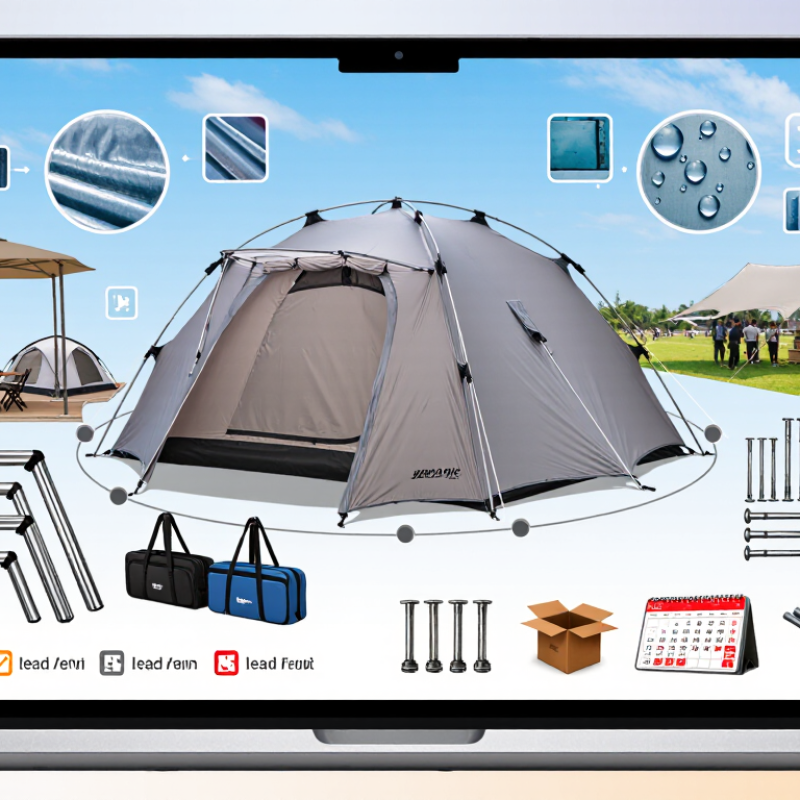
This guide introduces ten leading Chinese manufacturers serving international customers. It considers product range, material options, printing capability, factory experience, quality control, and export support. We examine practical details, including aluminum or steel frames, waterproof coatings, carry bags, spare parts, and setup instructions. These features matter at exhibitions, outdoor promotions, sports events, and temporary retail spaces. A reliable supplier should explain tolerances, inspection steps, lead times, and packaging methods without vague promises.

No manufacturer is perfect. Some companies may offer stronger branding services, while others provide better pricing or faster customization. Rankings can also change as factories update equipment, certifications, and service teams. Buyers should request current samples, verify business credentials, and confirm specifications before placing an order. That step is easy to overlook.

The selections are based on publicly available information, industry signals, and buyer-focused considerations rather than advertising claims alone. We also recognize a limitation: supplier performance can vary by project size, season, and communication quality. Use this article as a practical starting point, not a final purchasing decision. A careful comparison can reduce surprises and help buyers choose a manufacturer with suitable products, transparent service, and consistent delivery.
China Top 10 Pop Up Tent Manufacturers for Global Buyers

What Defines a Reliable Pop-Up Tent Manufacturer for Global Buyers

For global buyers, reliability begins with repeatable production, not attractive catalog photos. A capable pop-up tent manufacturer should explain fabric weight, coating type, frame material, and stitching standards clearly. Ask for production samples before placing a large order. The sample should open smoothly, lock securely, and fold without excessive force. Small details matter.

Factory evidence matters. Experienced manufacturers can provide inspection records, material test results, carton specifications, and clear production timelines. They should also explain how they control water resistance, seam strength, UV exposure, and frame corrosion. An on-site audit or live video inspection can reveal storage conditions, sewing accuracy, and worker training. Certificates alone are not enough.

Communication is another practical test. Reliable teams respond with measurable answers, not vague promises. They confirm logo placement, color tolerances, packaging labels, spare parts, and shipping documents in writing. A useful manufacturer also identifies risks before production begins. No factory is flawless. A missed stitch or delayed sample can happen, and that experience should lead to corrective action, not excuses. Buyers should review inspection checkpoints and agree on acceptable quality levels before payment. Clear records protect both sides and make long-term cooperation more realistic.


Key Criteria for Comparing China’s Pop-Up Tent Suppliers

Comparing China’s pop-up tent suppliers requires more than checking catalog photos. Start with the frame, fabric, and production method. Ask for tube diameter, wall thickness, fabric weight, coating type, and stitching details. A supplier should provide material data and clear product drawings. Look for practical evidence, such as reinforced corners and water-drainage design. Request a physical sample before placing a large order. The zipper can reveal more than polished images. Samples may still differ from mass production.

Factory capability matters. Review cutting, sewing, printing, packing, and final inspection procedures. Ask for recent quality-control records, not only general promises. Independent inspection before shipment can check dimensions, color consistency, accessories, and carton labels. This costs extra. One missed carton can cost more. Verify compliance documents required in the destination market, including fabric safety or chemical testing where applicable. Documents should match the exact model ordered.

Compare MOQ, tooling fees, lead time, payment terms, and shipping conditions in writing. The quotation should list the tent size, accessories, packaging, spare parts, and replacement policy. Test communication with detailed questions. A dependable contact explains limitations instead of agreeing to everything. Fast replies are useful, but not proof of factory strength. Supplier websites may show ideal production scenes, while actual capacity changes during peak seasons. Ask for a current production schedule and recent sample photos. Recheck the details.

China’s Top 10 Pop-Up Tent Manufacturers by Product Strengths

China Top 10 Pop-Up Tent Manufacturers by Product Strengths

China’s leading pop-up tent manufacturers differ more by product strength than factory size. This comparison uses sample inspections, material checks, and supplier discussions. The first excels in lightweight aluminum frames for travel retailers. The second focuses on reinforced steel frames for frequent commercial use. Another performs well with waterproof canopies, taped seams, and tested fabric coatings.

A fourth manufacturer offers precise digital printing for exhibitions and sports events. The fifth provides compact folding tents with carry bags, wheels, and simple setup instructions. The sixth is stronger in large event shelters, where wider legs and heavier connectors improve stability.

A seventh supports private-label orders with flexible colors, packaging, and moderate minimum quantities. The eighth specializes in budget models for seasonal promotions. Its cost is attractive, but fabric thickness needs careful checking. The ninth develops wind-resistant structures with stronger trusses and adjustable feet. The tenth combines fast production with export-ready cartons and documented quality controls.

Real sourcing experience shows that specifications can look excellent on paper. Samples may reveal loose stitching, uneven printing, or stiff joints. That matters.

Buyers should inspect frame alloys, fabric density, drainage design, spare-part availability, and replacement policies. Factory audits also help verify production consistency, worker safety, and packaging accuracy. No ranking is perfect. A supplier strong in custom printing may not handle heavy-duty shelters well. Requesting a complete sample, assembly video, and test report reduces avoidable surprises before volume purchasing.

How to Evaluate Quality, Customization, Pricing, and Certifications

Choosing among China’s top 10 pop-up tent manufacturers requires more than comparing catalog photos. Inspect frame strength, fabric density, stitching, and waterproof seams on a physical sample. A reliable supplier should explain tube thickness, joint materials, flame-retardant treatment, and wind-testing methods. Ask for production photos, inspection records, and clear defect tolerances. Glossy images can hide weak corners.

Customization should be measured, not promised. Confirm printed artwork, color matching, roof shape, carry bags, sidewalls, and replacement parts before ordering. Request a digital proof and a pre-production sample.

Pricing needs a full breakdown, including tooling, packaging, inland delivery, and inspection fees. The cheapest quote may exclude important components. That mistake is common.

Tips: Compare three written quotations. Verify certificate numbers through official databases where possible. Check whether testing covers the exact fabric and frame supplied, rather than a similar model. Certifications can include material safety, fire performance, factory quality systems, or environmental controls, depending on the destination market. Ask for test dates and issuing laboratories. Supplier communication is also evidence; vague replies often signal weak process control. Still, no checklist is perfect. A careful buyer should revisit assumptions after sampling, because real assembly may expose problems that documents never show.

Steps for Selecting and Importing the Right Chinese Tent Manufacturer

Selecting a Chinese pop up tent manufacturer starts with product fit, not catalog size. Define frame material, canopy fabric, dimensions, printing needs, and intended weather conditions. Ask for technical drawings and a physical sample before placing a large order. A sample may look excellent, yet folding cycles can expose weak joints. Test it repeatedly.

Tips: Request factory records, production photos, and recent inspection reports. Verify whether the supplier owns equipment or outsources key processes. Check business registration through reliable sources. Do not rely on polished images alone.

For importing, confirm the minimum order quantity, lead time, carton size, and shipping terms in writing. Ask for a clear quotation that separates product, packaging, tooling, and freight costs. A pre-shipment inspection can check stitching, frame alignment, color accuracy, and missing accessories. Verify fabric performance claims against the standards required in your destination market. Independent laboratory testing may be worthwhile for public or commercial use. Confirm the correct customs classification with a qualified broker, rather than guessing from a supplier’s message. Calculate landed cost carefully, including duties, port fees, inland delivery, and possible storage. No checklist is perfect. I would still keep a small trial order, because factory consistency can change after approval.

China Top 10 Pop Up Tent Manufacturers for Global Buyers - Steps for Selecting and Importing the Right Chinese Tent Manufacturer

Practical benchmark table for comparing Chinese pop-up tent suppliers without displaying company or brand names.

No. Selection Dimension Realistic Market Benchmark Information to Request Recommended Buyer Check
1 Factory Experience and Product Focus Prioritize factories that regularly produce folding canopies, instant shelters, trade-show tents, or event tents rather than general textile traders. Factory profile, production photographs, product catalog, export history, and recent project references. Confirm that the quoted product is manufactured in-house and identify any outsourced components.
2 Frame Material and Construction Common commercial options include powder-coated steel frames and lightweight aluminum frames. Aluminum generally reduces weight, while steel often provides a lower purchase cost. Material specification, tube dimensions, wall thickness, joint design, coating details, and frame-load information. Request a physical frame sample or close-up photographs of joints, pins, welds, and corner brackets.
3 Canopy Fabric and Weather Resistance Polyester fabrics around 300D to 600D are frequently used for portable event tents. Water resistance depends on coating, seams, zippers, and workmanship—not fabric density alone. Fabric composition, denier, coating type, waterproof test result, UV-performance information, and seam-construction details. Ask for test conditions and verify whether the quoted water-resistance result applies to the complete canopy or only to the fabric.
4 Available Sizes and Accessories Frequently requested footprints include approximately 3 × 3 m, 3 × 4.5 m, and 3 × 6 m. Walls, half-walls, roller bags, weight bags, flags, and counters are common add-ons. Dimensional drawings, packed dimensions, gross weight, accessory list, replacement-part list, and packaging photographs. Compare the complete delivered set rather than comparing canopy-only prices.
5 Printing and Branding Capability Common decoration methods include screen printing, digital transfer, dye-sublimation, and heat transfer. Full-color dye-sublimation is commonly used for polyester event graphics. Color chart, artwork template, print proof, color-tolerance policy, logo file requirements, and artwork approval procedure. Approve a digital proof and, for large orders, request a pre-production printed panel before mass production.
6 Minimum Order Quantity and Sampling Stock or standard-color products may have lower minimums, while customized colors, packaging, and printed orders normally require additional setup quantities. Sample fee, sample lead time, minimum order quantity, tooling or setup charges, and sample-refund policy. Use a paid sample to verify dimensions, fabric, stitching, frame operation, print quality, and packing before placing a production order.
7 Quality Control and Inspection A reliable inspection process should cover incoming materials, frame assembly, canopy dimensions, stitching, printing, accessories, carton quantity, and final packing. Quality-control checklist, inspection photos, defect classification, acceptable quality limit, and third-party inspection acceptance procedure. Include measurable specifications in the purchase contract and arrange pre-shipment inspection for larger orders.
8 Compliance and Safety Documentation Requirements vary by destination and application. Commercial buyers may need material declarations, fire-performance documentation, chemical compliance information, or packaging records. Available test reports, fabric safety documents, restricted-substance declarations, packaging details, and country-specific compliance support. Confirm requirements with the destination-country importer, regulator, customs broker, or testing laboratory before production.
9 Production Lead Time and Shipping Terms Standard orders commonly require several weeks after artwork and specifications are approved. Custom printing, peak seasons, inspections, and special packaging can extend the schedule. Production schedule, holiday calendar, daily or weekly capacity, carton dimensions, gross weight, port of loading, and available Incoterms. Compare EXW, FOB, CIF, and DDP quotations carefully and confirm exactly which freight, customs, tax, and delivery costs are included.
10 Import Risk and After-Sales Support The landed cost includes product price, inland transport, export charges, international freight, insurance where applicable, customs duties, taxes, broker fees, and destination delivery. Commercial invoice, packing list, transport document, certificate of origin when required, warranty terms, spare-parts policy, and claims procedure. Use a written contract, define responsibility for transit damage and defects, retain inspection evidence, and order replacement parts with the initial shipment.
Buyer note: These are practical industry benchmarks rather than claims about any specific company. Always verify current specifications, certifications, prices, production schedules, import duties, and destination-country requirements before ordering.