What is the Best Type of Sleeping Bag for Your Needs?
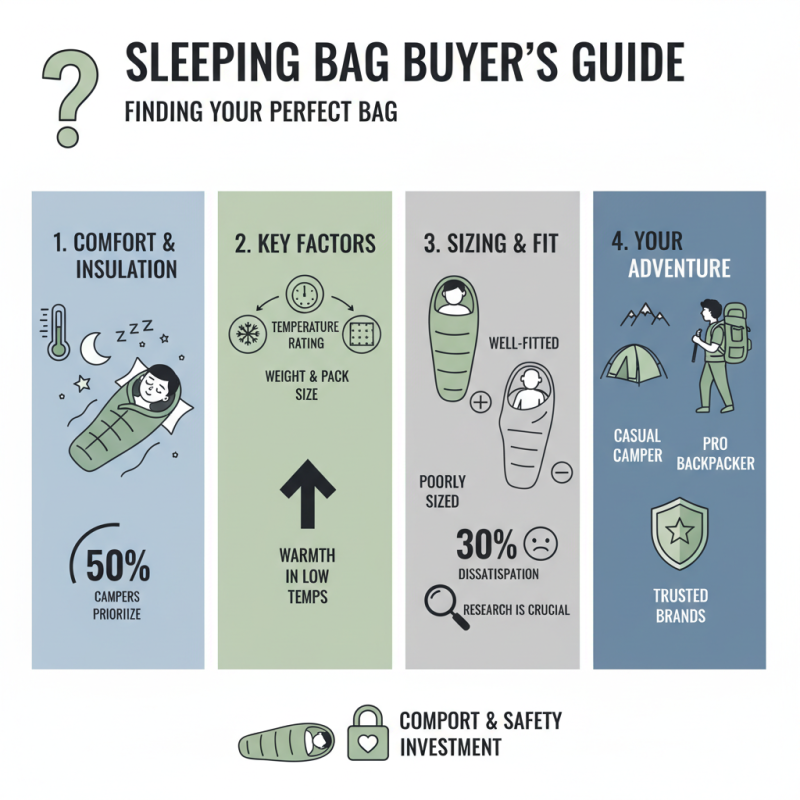
Choosing the right sleeping bag can significantly enhance your outdoor experience. According to the Outdoor Industry Association, more than 50% of campers prioritize comfort and insulation in their gear. When selecting from the top sleeping bags on the market, factors such as temperature rating, weight, and materials are crucial. For instance, a quality sleeping bag should keep you warm even in low temperatures.
Many outdoor enthusiasts often overlook the importance of proper sizing and fit. A well-fitted bag retains heat better, while a poorly sized bag can lead to discomfort. Industry studies reveal that 30% of campers report dissatisfaction due to inadequate sleeping gear. This highlights the need for thorough research before purchasing.
Understanding your specific needs is vital. Whether you're a casual camper or a professional backpacker, the right sleeping bag can make a difference. Look for trusted brands that offer detailed specifications. Remember, investing in a top sleeping bag isn’t just a purchase; it’s an investment in your comfort and safety during those chilly nights under the stars.
Understanding Different Types of Sleeping Bags: An Overview
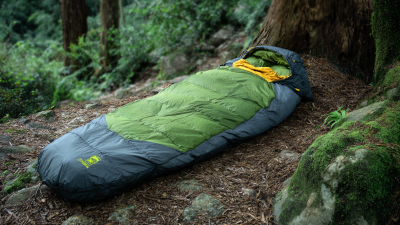
When choosing a sleeping bag, understanding the types available is crucial. Sleeping bags come in various designs, each suited for different conditions and preferences. There are three main types: mummy bags, rectangular bags, and semi-rectangular bags. Mummy bags are designed to retain heat, fitting snugly around your body. They are lightweight and ideal for backpackers. Rectangular bags offer more space and comfort but can be bulkier.
**Tip:** Consider the temperature rating of the sleeping bag. It’s essential to choose one that matches your camping climate.
Semi-rectangular bags provide a balance between the two. They offer slightly more room than a mummy bag while still keeping warmth in. Each type has pros and cons, depending on usage.
**Tip:** Think about your sleeping habits. If you move around a lot during sleep, a rectangular bag might be better. Mummy bags can feel restrictive to some.
Remember to factor in material and insulation type. Synthetic materials are generally heavier but dry quickly. Down insulation is lighter and packs smaller, but it can be expensive. Choosing the right sleeping bag requires careful consideration of these factors.
What is the Best Type of Sleeping Bag for Your Needs? - Understanding Different Types of Sleeping Bags: An Overview
| Sleeping Bag Type |
Temperature Rating |
Weight |
Insulation Type |
Best Use |
| Rectangular |
40°F to 70°F |
3 lbs |
Synthetic |
Car Camping |
| Mummy |
10°F to 40°F |
2 lbs |
Down |
Backpacking |
| Semi-Rectangular |
30°F to 50°F |
2.5 lbs |
Hybrid |
Versatile Use |
| Bivy Bag |
20°F to 50°F |
1.5 lbs |
Water-Resistant |
Expedition & Survival |
| Winter |
-10°F to 30°F |
4 lbs |
Down/Synthetic |
Cold Weather Camping |
Temperature Ratings: Choosing the Right Bag for Your Climate
When choosing a sleeping bag, temperature ratings are crucial. They indicate the lowest temperature at which the bag can keep a sleeper warm. A sleeping bag rated for 20°F (-6°C) may feel comfortable down to that temperature for most users. However, individual comfort levels can vary widely. Factors like metabolism and clothing matter.
Most experts recommend looking at three ratings: comfort, limit, and extreme. The comfort rating shows the temperature users can sleep comfortably. The limit rating indicates the lowest temperature for survival. The extreme rating is only for emergency situations. According to a report by the Outdoor Industry Association, nearly 70% of campers prioritize temperature ratings when selecting gear.
It's vital to understand the climate conditions you'll face. A bag designed for a cold winter in the Rockies won't suit a summer night in the woods. Over-packing can weigh you down. Plus, underestimating temperatures can leave you shivering. Always check local weather conditions before heading out. Your sleeping bag is only as good as its fit for the environment.
Insulation Materials: Down vs. Synthetic Sleeping Bags
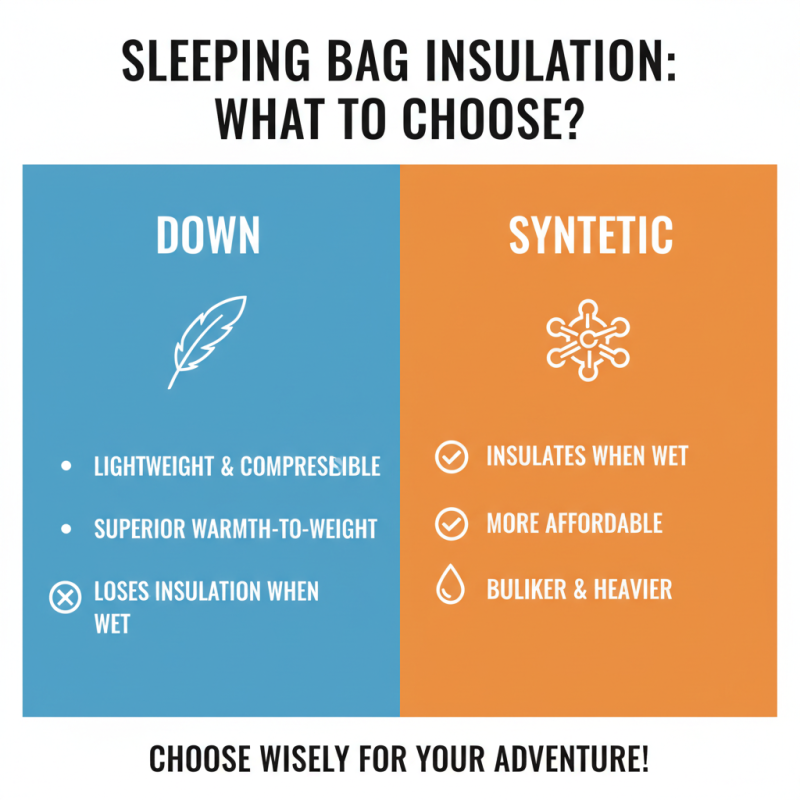
When choosing a sleeping bag, insulation materials matter greatly. Down and synthetic options each have their own characteristics. Down sleeping bags are light and compressible. They provide excellent warmth-to-weight ratios. However, they lose insulation when wet. This can be a drawback during damp conditions.
Synthetic sleeping bags, on the other hand, handle moisture better. They retain warmth even when wet. This makes them a good option for humid environments. They tend to be bulkier but are generally more affordable. Weighing your needs is essential before deciding.
**Tips:** Always consider your camping environment. If it’s wet, synthetic might be a wise choice. Conversely, for dry, cold climates, down can be superb. Remember to check the temperature rating of your sleeping bag. It should match your expected weather conditions. Don’t forget to try the bag. A good fit can make all the difference in comfort.
Sleeping Bag Shapes: Mummy, Rectangular, and Beyond
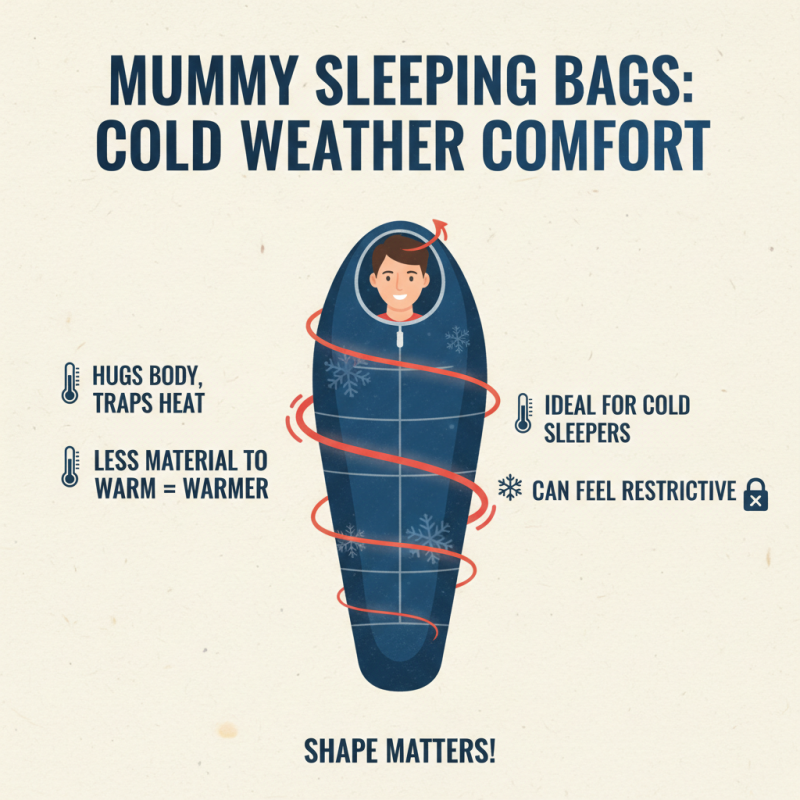
When choosing a sleeping bag, the shape matters. Mummy bags are designed to hug your body. They trap heat, making them ideal for cold weather. The narrow design means less material to heat. If you’re a cold sleeper, this style may be your best bet. However, some find them restrictive.
Rectangular bags offer more room. They allow for movement, which is great for warmer nights. You can easily open them up like a blanket. If you tend to feel confined, this shape is preferable. Keep in mind, rectangular bags are less efficient in retaining heat. They work well for family camping trips, where comfort is key.
There are also unique shapes, like semi-rectangular and backpacking designs. Each has its advantages and drawbacks. Some bags are lighter but may sacrifice warmth. Others can be bulkier. You need to weigh your options. What works for one person might not work for another. Consider your sleeping habits and camping conditions before making a choice.
Features to Consider: Zippers, Liners, and Packability
When choosing a sleeping bag, several features play a crucial role.
Zippers can greatly affect your comfort level. A
two-way zipper often allows better ventilation. Look for models that offer
snag-free designs. This will prevent frustrations when getting in and out.
If you often camp in colder weather, consider draft collars that seal warmth effectively.
Liners are another important feature. They not only provide an extra layer of warmth
but also keep your sleeping bag cleaner. Liners are easier to wash, extending the lifespan of your sleeping bag.
Look for lightweight options that pack down small. This is important
for backpackers who value space and weight. Yet, remember that a thicker liner can take up more room in your pack.
Packability is essential for any outdoor enthusiast. A sleeping bag that compresses easily is ideal. It can fit snugly into your
backpack without adding bulk. Check for compression sacks that come with your sleeping bag.
Experiment with packing techniques to find what works best. Sometimes, you might find an unexpected way to save space.
However, be cautious; cramming can damage the bag. Always aim for a balance between size
and protection.